



Cendio has announced a new partnership with Microsoft to integrate ThinLinc into Microsoft Azure's high-performance computing environment. The initiative brings together two complementary areas of expertise: Cendio’s long-standing experience in remote Linux desktops and Microsoft’s global HPC infrastructure (Access ThinLinc on Azure Marketplace here).
In practice, this partnership addresses a recurring challenge across industries such as engineering, scientific research, and automotive: how to access high-performance Linux environments simply and securely, without relying on high-end local machines.
According to Jean Zagonel, CMO at Cendio, the integration expands ThinLinc’s capabilities by leveraging the scale of the cloud. “ThinLinc provides researchers and users with high-performance Linux desktops. Integrating that with Azure allows us to take full advantage of the powerful infrastructure the platform offers.” (Read Microsoft’s Azure HPC blog post.)
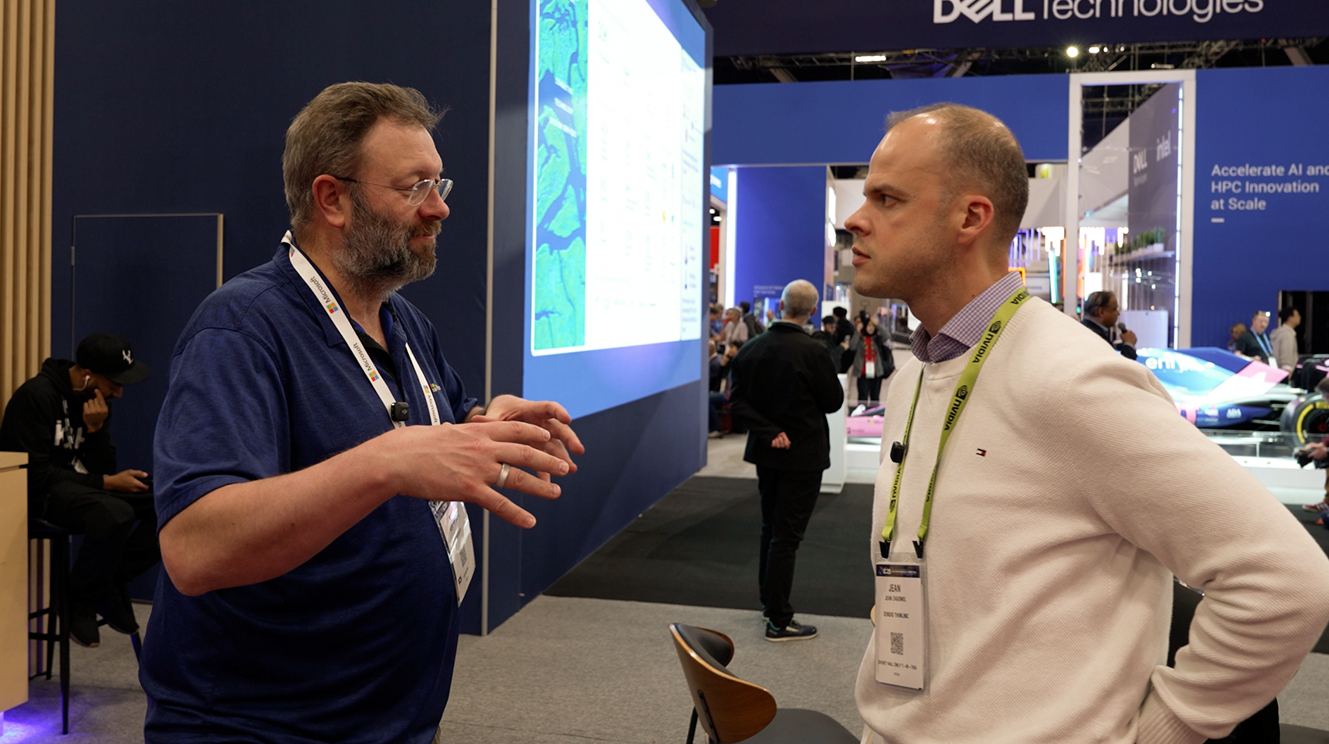
The impact of this combination becomes clearer in real-world applications. In environments such as Formula 1 and NASCAR, teams rely on advanced simulations to study aerodynamics, on-track performance, and tire behavior under varying conditions.
As explained by Xavier Pillons, Principal TPM at Microsoft Azure, the scale of data involved is immense. “From motorsports like Formula 1 to other industries, simulations generate massive amounts of data, ranging from airflow over a car to tire behavior under different conditions. These are complex scenarios that require extremely high compute power to process efficiently.”

In many cases, the challenge lies not only in processing data but in accessing it efficiently. Transferring large files quickly becomes impractical at scale. As Xavier Pillons notes:
“If you upload a 40 GB simulation file, the results can easily be ten times larger. At that scale, downloading data becomes impractical — it simply doesn’t work for real-world workflows.”
This is where a cloud-based approach becomes essential. Instead of moving large datasets, users can work directly from cloud-hosted engineering workstations, close to where the computation happens.
In Xavier Pillons’ view, “for post-simulation analysis, what teams really need is a cloud-based engineering workstation. That way, they can interact with the data directly where it is generated, without the need to move large volumes back and forth.” (Watch the deployment tutorial here and read the Azure deployment guide here.)
As Kurt Niebuhr, Principal Program Manager at Microsoft Azure, highlights, Azure hosts some of the world’s largest AI and HPC supercomputers, making remote access essential rather than optional. “You cannot bring these massive computers to the researchers. You have to bring the researchers to the computer.” According to him, this is exactly where the Cendio solution fits in — simplifying access to these powerful environments without requiring users to deal with complex technical configurations or needing to physically relocate to where the supercomputers are hosted. (Explore NVIDIA and Isaac Sim integration resources.)
Beyond performance, the solution also addresses growing demands for mobility and security. Globally distributed teams can access the same environments, while sensitive data remains protected on the server side.
As highlighted by Kurt, “teams are increasingly distributed around the world, and they need reliable access to these environments. At the same time, it’s critical to keep intellectual property secure — ensuring sensitive data remains on the server side while users access it remotely.”
Another key benefit is operational agility. Rather than spending days or even weeks configuring environments, organizations can have new users up and running in minutes. Kurt explains that the platform operates as a managed service, removing much of the technical complexity traditionally associated with HPC environments. “Instead of provisioning powerful physical desktops or going through complex setups, organizations can simply provide a server address, a username, and a password. In many cases, new users can be up and running in about ten minutes.” According to him, this enables teams to deploy environments quickly, streamline onboarding, and significantly reduce time to solution.
Robert Heschel, HPC Expert at Cendio, also highlights how the Azure image simplifies deployment workflows for end users. “With the image we provide in Azure, organizations can deploy new virtual machines very easily and immediately take advantage of the available hardware. Instead of dealing with complex VM configurations or manually installing drivers, users can benefit from an almost one-click installation experience.”
See the Isaac Sim setup tutorial.
Read NVIDIA’s official documentation.
By combining ThinLinc with Azure’s infrastructure, the partnership between Cendio and Microsoft sets a new standard for accessing high-performance Linux environments — simpler, more secure, and aligned with the demands of an increasingly distributed, data-intensive world.
More than a technical integration, this collaboration reflects a natural convergence between two approaches that, together, expand what is possible for researchers, engineers, and organizations worldwide.
__________________________________
▪️ThinLinc on Azure Marketplace: Deploy ThinLinc directly from the Microsoft Azure Marketplace.
▪️Microsoft Azure HPC Blog: Overview of the ThinLinc integration within Azure HPC environments.
▪️ThinLinc Deployment Video Tutorial: Step-by-step video walkthrough for deploying ThinLinc on Azure.
▪️Azure Deployment Guide: Written tutorial covering ThinLinc installation and configuration on Azure.
▪️Isaac Sim on Azure Tutorial: Guide for running NVIDIA Isaac Sim using ThinLinc on Azure.
▪️NVIDIA Official Documentation: Official NVIDIA documentation for advanced Azure cloud setup.
▪️NVIDIA Developer Forum Guide: Community guide and video tutorial for Isaac Sim integration with ThinLinc on Azure.